Adlerian Philosophy Interpersonal Framework Relational Archetypes About Bart Therapeutic Services
Discover RCT Take the RMI Work With Me
Relational Capacity Therapy

Relationships aren't about finding the right person—they're about becoming the right person.

I help individuals, partners, and relationship systems develop the five core capacities that make healthy relationships possible. Not through rules or scripts—through genuine growth.

All relationships are fundamentally the same.

Whether you're single, dating, married, or navigating multiple partnerships—healthy relating requires the same core capacities. These same capacities strengthen parenting, friendships, and professional relationships too.

Most relationship advice fails because it treats symptoms instead of causes. It gives you scripts to follow and rules to enforce. But you can't script your way to genuine connection. And you can't control another person into an authentic relationship with you.

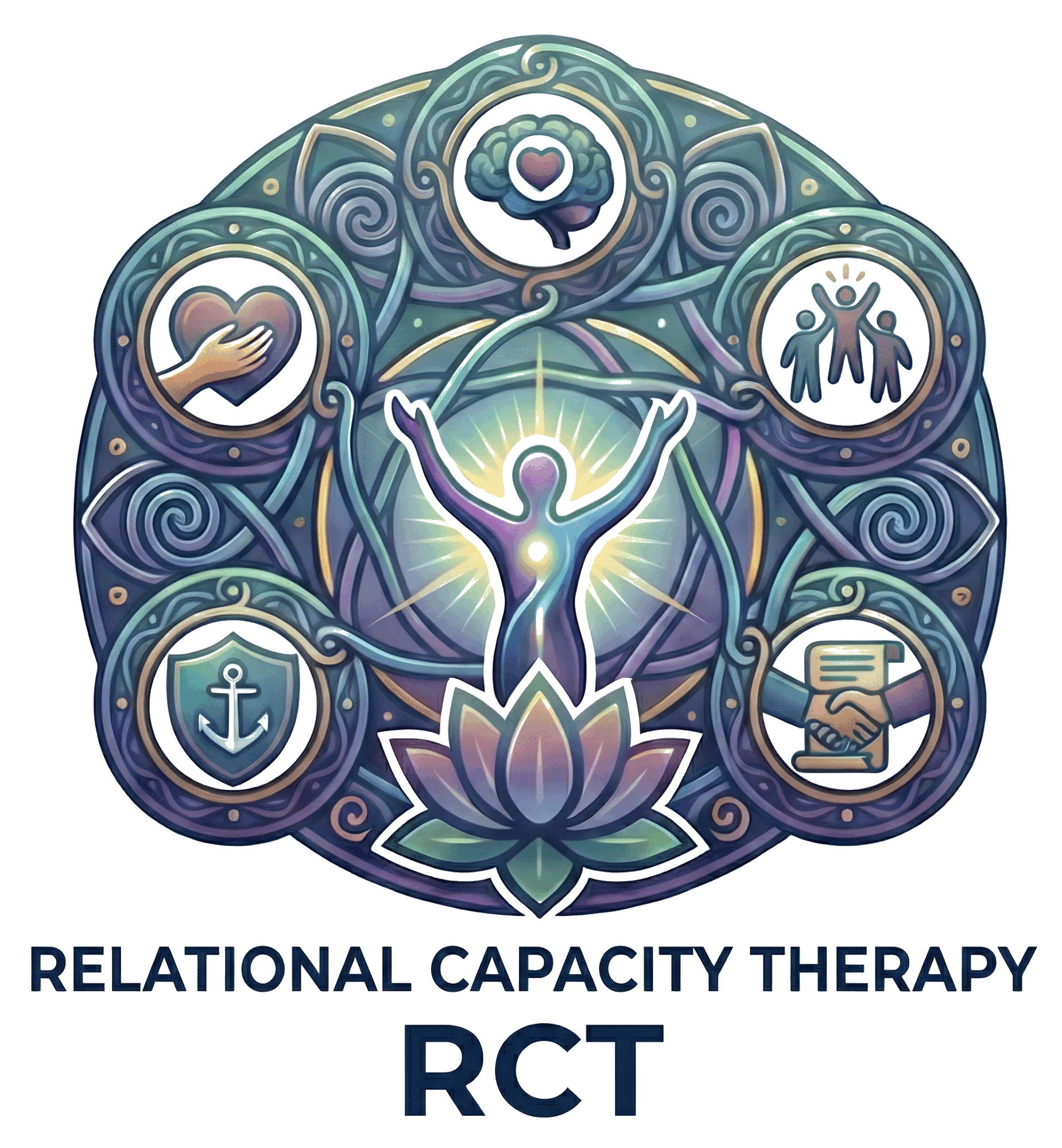
I practice Relational Capacity Therapy (RCT)—a framework I developed that operationalizes Alfred Adler's Individual Psychology into five measurable capacities. Adler understood something that most modern therapy has forgotten: mental health is fundamentally about how we relate.

This isn't about learning communication techniques or memorizing "I statements." It's about developing the internal capacities that make healthy connection possible in the first place—and discovering the patterns that have been getting in your way.

"All problems are interpersonal relationship problems." — Alfred Adler, as presented in The Courage to Be Disliked
🤝

Democratic Relating

Healthy relationships are partnerships between equals—horizontal, not hierarchical. No one above, no one below.

📜

Agreements Over Rules

Rules are imposed. Agreements are negotiated. One creates resentment; the other creates partnership.

🌱

Growth Is Always Possible

Your patterns aren't fixed. They're habits that made sense once—and can be updated with awareness and practice.

Five capacities. Twenty-five sub-capacities. Five life domains.

RCT identifies five interconnected capacities that together create the foundation for healthy relating. But the real depth comes from understanding how each capacity breaks down—and how they shift across different areas of your life.

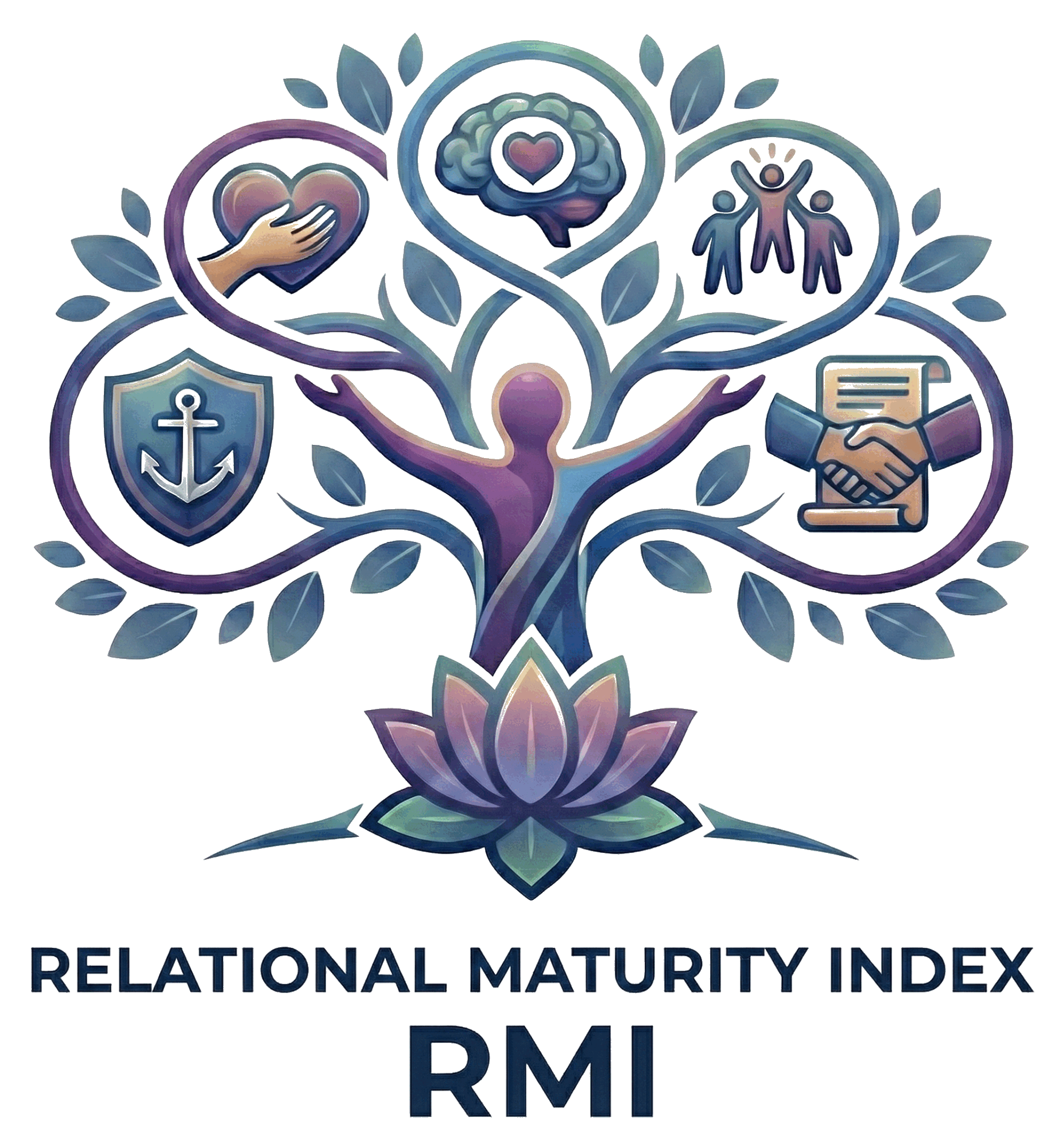
Most assessments give you a single score or type. The Relational Maturity Index goes deeper. Each of the five core capacities comprises five sub-capacities—25 distinct dimensions of relational functioning that reveal exactly where your strengths and growth edges lie.

Even more revealing: your capacities aren't static. How you show up with a romantic partner differs from how you show up with family, friends, colleagues, or under pressure. RCT measures you across five life domains, revealing context-dependent patterns that single-score assessments miss entirely.

25 Sub-Capacities

From self-disclosure to shame tolerance, from emotion regulation to repair skills—pinpoint exactly where to focus your growth.

5 Life Domains

Romantic, family, friendships, work, and under pressure. See how your capacities shift across contexts.

10 Archetypes

Recognizable patterns of relating, each with characteristic strengths, blind spots, and growth edges.

Private Logic

The underlying beliefs driving your patterns—made explicit so they can be examined and updated.

💜

Vulnerability

The capacity to be genuinely seen

Sharing your authentic self, admitting struggles, letting others affect you. Without vulnerability, relationships stay surface-level regardless of their duration. Sub-capacities include self-disclosure, emotional honesty, shame tolerance, receiving care, and asking for help.

💙

Emotional Intelligence

The capacity to work skillfully with emotions

Understanding your own emotional landscape, reading others accurately, regulating without suppressing. Sub-capacities include self-awareness, other-awareness, regulation, expression, and empathy.

💚

Compersion

The capacity for joy in others' happiness

Finding genuine delight in others' success, growth, and connections—even when they don't directly benefit you. The opposite of jealousy. Sub-capacities include celebrating others' joy, success, attention, growth, and resource-sharing.

🩵

Relational Confidence

The capacity for stable self-worth in connection

Secure presence without needing constant validation or fearing abandonment. The internal foundation that allows other capacities to function. Sub-capacities include worth, stability, autonomy, validation independence, and non-comparison.

🤎

Agreements

The capacity to navigate the business of relationships

Setting boundaries, handling conflict, negotiating repairs, respecting autonomy. The logistics that all relationships require. Sub-capacities include boundaries, negotiation, conflict navigation, repair, and flexibility.

Explore the Knowledge Portal →

Ten relational archetypes. Your unique combination.

When capacities combine in characteristic patterns, they form recognizable ways of being in relationship. Every archetype developed for good reason and brings genuine strengths.

You're not just one archetype. The RMI identifies your primary, secondary, and tertiary archetypes—a trio that together paints a fuller picture of how you relate. Think of it like astrology's sun, moon, and rising signs: your primary shows your default pattern, your secondary reveals what emerges under stress or intimacy, and your tertiary often represents aspirational or underdeveloped capacities. The interplay between all three tells a richer story than any single label could.

🌟
The Integrated
Integration in motion
👁️
The Sentinel
Watchful attunement
🍑
The Giver
Learning to receive
🛡️
The Guardian
Protective strength
The Charger
Driving forward
💗
The Empath
Deep feeling
🔍
The Analyst
Strategic connection
👑
The Sovereign
Self-sufficient presence
🎵
The Harmonizer
Peace-seeking grace
🌱
The Developing
Still forming

Discover your archetype trio, understand your patterns, and get a personalized growth roadmap.

Take the Relational Maturity Index →

The Relational Maturity Index

Adaptive assessment: 100 or 125 scenarios depending on relationship status. Complete relational profile across 25 sub-capacities and your life domains (Work, Family, Friends, Pressure, and Romantic if applicable).

📊25 sub-capacity scores
🎯5 domain analysis
📈Personalized growth plan
🔒Privacy-first (browser only)
Take the Free Assessment
Relational Maturity Index
Bart Golub
ASW #131505 Columbia MSSW UHC Network
Affiliations

I spent a decade learning to read people.

After Cornell's Hotel School, I moved to Las Vegas and spent years in the casino industry—working on loyalty programs, VIP services, and the psychology of what keeps people coming back. It was a fascinating education in human motivation: understanding the gap between what people say they want and what they actually respond to, watching how behavior can be shaped by the right incentives, and learning what I came to call "the language of bullshit"—the performance of sincerity that certain environments require.

Eventually I moved into tech and managed sales teams in San Francisco. But I kept running into the same problem: I couldn't be authentic with my teams while also playing the political games that advancement required. I kept choosing genuine connection over career climbing, which cost me several jobs but taught me something important about what I actually valued.

That realization led me to Columbia for my MSSW. During my studies, I stumbled upon The Courage to Be Disliked—a book that introduced me to Alfred Adler's Individual Psychology and fundamentally changed how I understood relationships. Through that time, I also worked with Dossie Easton, co-author of The Ethical Slut, which deepened my understanding of how the principles of ethical non-monogamy apply to all relationships. Everything I'd learned—about motivation, influence, authenticity, and connection—came together in Relational Capacity Therapy.

I'm queer, polyamorous, and practice what I teach. I see clients at San Francisco Counseling Collective—individuals, partners, and relationship systems of all kinds who are ready to stop fitting into boxes and start building something that actually works for them.

📚 Recommended Reading

The Courage to Be Disliked Ichiro Kishimi & Fumitake Koga
The Ethical Slut Dossie Easton & Janet Hardy
Unconditional Parenting Alfie Kohn
Is this work right for you?

Not every therapist is right for every client. Here's how to know if we'd be a good fit.

This might be for you if...

  • You're questioning whether the relationship structures you inherited actually work for you
  • You want to understand why you do what you do in relationships, not just get told what to do differently
  • You're ready to look honestly at your patterns—even the uncomfortable ones
  • You believe relationships should be partnerships between equals, not power hierarchies
  • You're practicing or curious about ethical non-monogamy, polyamory, or relationship anarchy
  • You're navigating LGBTQIA+ identity, coming out, or integrating different parts of yourself
  • You want a framework for growth, not just venting and validation
  • You're an individual, couple, or polycule willing to do actual work

× This probably isn't for you if...

  • You want a therapist to tell you who's right and who's wrong
  • You're looking for someone to help you change or fix your partner
  • You want to maintain the status quo without examining underlying patterns
  • You believe relationships require one person to be in charge
  • You're seeking validation rather than genuine growth
  • You want quick fixes or communication scripts without deeper work
  • You're looking for traditional couples therapy that assigns homework and teaches "I statements"

Frequently asked questions

The logistics of working together.

Do you offer in-person and virtual sessions?

Yes, both. In-person sessions are available at San Francisco Counseling Collective in the Castro and the Flood Building in Union Square. Virtual sessions are available throughout California. Either works well—choose whatever fits your life.

Do you accept insurance?

I'm in-network with United, UnitedHealthcare, United Behavioral Health, Optum, and UMR. For other insurance plans, I provide superbills that you can submit for out-of-network reimbursement. Many PPO plans cover 50-80% of session costs this way.

Do I need to take the assessment first?

It's not required, but I recommend it. The Relational Maturity Index gives us a shared language and starting point. It's free, takes about 25 minutes, and the results stay in your browser—completely private.

What's the difference between partners and polycule therapy?

Couples work focuses on one dyadic relationship. Polycule work addresses the system—how multiple relationships interact, metamour dynamics, and agreements that affect everyone. I've worked extensively with both.

How long are sessions?

All sessions are 50 minutes. If you have specific needs that require a different arrangement, we can discuss that.

How long will I be in therapy?

It depends on what you're working on and how deep you want to go. Some people get what they need in a few months; others stay for a year or more. We'll check in regularly about whether the work is still serving you.

How we can work together

All sessions incorporate the RCT framework. The assessment results become a shared language for your growth.

👤

Individual Therapy

Understand your relational patterns, develop underdeveloped capacities, and become the person who can have the relationships you want.

  • RMI assessment & interpretation
  • Pattern identification & origin work
  • Capacity development exercises
  • Private logic exploration
💑

Couples Therapy

Understand your dynamic as a pairing, identify where you complement and where you clash, and build skills for navigating difference.

  • Both partners take the RMI
  • Compatibility & dynamic analysis
  • Conflict pattern intervention
  • Agreements negotiation support
🔗

Polycule Therapy

Navigate the complexity of multiple relationship dynamics, build sustainable structures, and develop compersion at the system level.

  • Multi-partner dynamic mapping
  • Metamour relationship support
  • System-level agreements
  • Jealousy & comparison work

Ready to build something better?

Reach out for a free 15-minute consultation to see if we're a good fit. No pressure, no commitment—just a conversation.

📱

Text Me

For consultations & questions

628.261.2906
📧

Email Me

For longer inquiries

bart.golub@sfcounselors.com
📍

Location

In-person & virtual

San Francisco Counseling Collective